20191217

Multitasking vs. Multi-thinking

Do you multitask to save time?

Multitasking can be great to save time. It can even increase energy when used well.

But if you confuse multi-thinking with multitasking you will waste time and increase stress.

Multitasking works well when you combine something that can be done automatically, i.e. without thinking, with something that requires your attention.

You can for instance use your commute time for more than transporting yourself; by reading on the bus or listening to a podcast in your car.

This type of multitasking can also be used to compensate something you may not enjoy that much with something that makes you happy. Like singing while vacuum cleaning.

This type of multitasking can save you time and increase your energy.

Multi-thinking on the other hand, is when we try to combine two or more things that require our attention. Instead of doing two things well, we will end up doing two or more things poorly. 
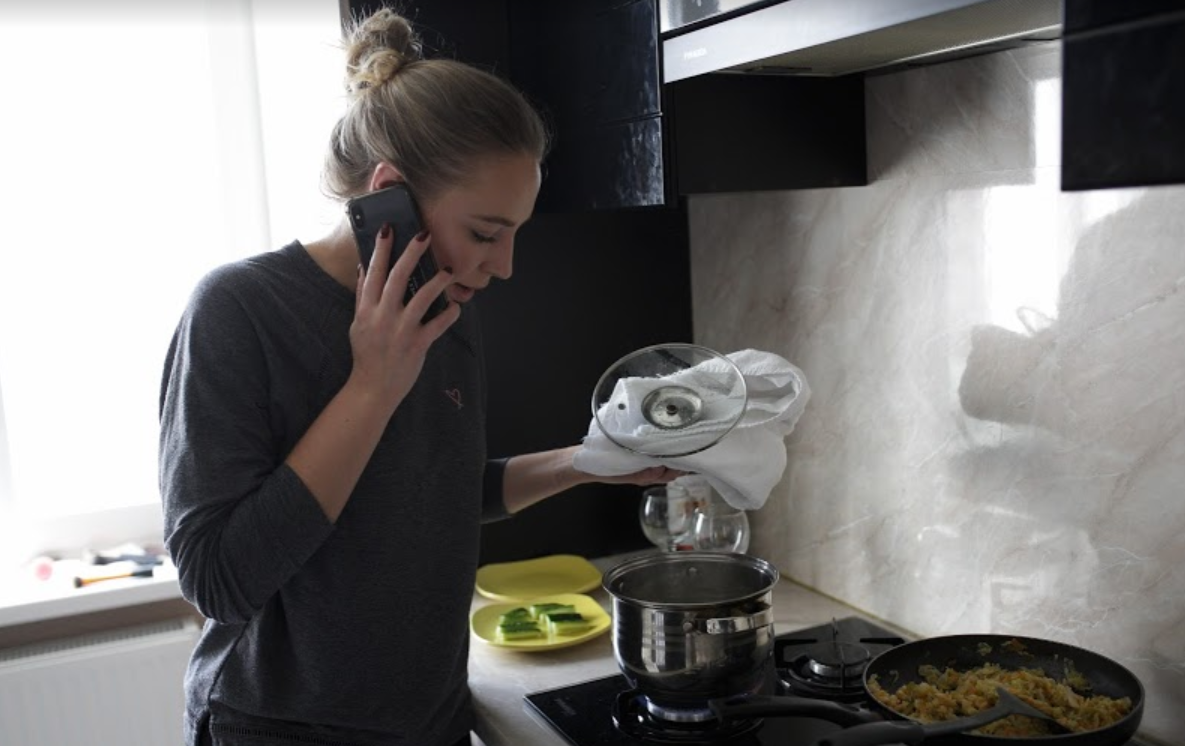
Woman cooking and talking on the phone. 
Photo by James Cook Media

Like participating in a brainstorm meeting at work and answering mails at the same time. 

Or talking to your child about how her day at school was while paying your bills.

Not only are you fooling yourself about the time saving part. You are not saving time when you shift your focus back and forth, back and forth. Interrupted focus is not only inefficient, it also makes you feel stressed.

You will have a hard time finishing things, especially finishing things in a way that is satisfying.

And trust me, people, especially children, notice the difference between your full and caring attention and distracted, half hearted conversation.

To get things done and be truly present in your life, combine activities you can do without thinking but focus your attention on one thing (or person!) at the time.
 In other words: multitask, don't multi-think.  

20191210

Maybe your salary is not your fault

“What’s up?” Victor looked at Manda, surprised about his colleague’s uncharacteristic frown.

She sat down heavily, even though she was a small woman.

“I just had my yearly salary talk. Every time I feel like I am being cheated, and I wonder if I am getting less because I am a woman.”

“Why would you be getting less? You are great at what you do.” He sat down opposite to her.
“Ever heard about the salary gap between men and women? Why would I be an exception?”
“Well, I wouldn’t care about statistics. Just make sure you ask for more. For as much as you are worth. Women should stand up for themselves. Be tougher.”
She scuffed.
“Remember the time you borrowed my car and drove it into a ditch?”
He grimaced.
“How can I possibly forget? You keep reminding me. I am telling you, there was something wrong with the steering wheel.”
“I know.”
“You know? You knew? All this time ...”
She stood up, arms crossed over her chest.
“But you know what, instead of fixing the problem, I expect everyone who drives my car to adapt to it.”
He was about to say something, but she was faster:
“You know, just be tough enough to steer it anyway.”


Iceland is rolling out the world’s toughest equal pay legislation. Prime minister Katrin Jakosdottir says that telling women they “just have to ask for more” is not the solution.
“You can’t place all responsibility for a structural change on the individual.”
Next time you tell a woman she “should” ask for more or stand up for herself, think about how you can be part of the needed structural change. 

20191119

Old and New in beautiful harmony

"There's a symbiosis of high-tech and traditional artisanship in every component."
Fernando Villa, Sagrada Familia's director of operations


When organizations introduce something new, they often throw out the old a bit too quickly.

Like organizations going agile and losing a lot of their leaders in the process. Not missing them until they are gone.

Or organizations removing assistants, counting on automated systems to do the work better and faster.

Or conference rooms getting high-tech equipment with overcomplicated user interfaces, leaving people looking for the standard projectors only to find they have already been removed.

Progress is fantastic. Digitalization can increase efficiency multifold and AI can complement us so we can focus on the human side of things.

When we find ways of using what we do well with the new and different, we can really be productive and create greatness.

Like the building of the already magnificent Sagrada Familia

20191112

Who do you want to be?

“Forget it mum, I am just no good at maths.” He put his head in his hands, one elbow on each side of the book.

With lifted eyebrows she looked at her teenaged son, sitting next to her at the kitchen table.

“What do you mean, no good at maths?”

He leaned back, shrugged.

“I am a person who is good with words, with languages, but I am no good at maths.”

“Really?”

He looked at her, frowning. She behaved as if she hadn’t seen his grades.

“Yes!”

“Could it possibly be that you see yourself as someone who is good at languages, and then you do what people who are good at languages do, and then you get great results?”

“Mum, it’s not that sim...”

“And you define yourself as someone who is not good at maths, you stop liking it and start getting poor results.“

“Mum, it's not about how I define myself.”

She put her hand on top of his.

“Oh yes sweetheart. It's all about who you think you are.”


Photo by Kaboompic.com from Pexels

White house chief of staff John Kelly explained why he stayed for 17 months in what he called a “bone-crushing hard job” by saying: “Military people don’t walk away.”

Once you define yourself as someone or something, your actions will become evident.


This goes for both “good” and “bad” behaviours.


I have clients who call themselves lazy. Or who say they are unstructured. Others say they are procrastinators.

The first thing I tell them is to re-define who they are.
When you define yourself the way you want to be, rather than as a limited version of you, the actions will follow.

It’s not what you do.


It’s who you are.

20191029

Hard work doesn’t always pay off


“I am sorry. I really don’t know why we didn’t make it. We did everything we could, everyone has worked so hard…” her voice trailed off. Steven looked up at the most senior project manager the company had. She was standing by the window in his office, hunched over, no sign of the energy that normally radiated from her tall figure. 

He put down his reading glasses. Knew how she hated when he was acting fatherly, so he resisted the urge to get up from behind his desk and pat her on the shoulder.

“I take it this is your first project that didn’t deliver as planned?”

She turned toward him.

“Of course. I have never failed before. I don’t understand how we could miss the deadline, and I really don’t understand how the competition could make it on time. I don’t get it. We did everything right; better than in previous projects in some aspects but… this time it wasn’t enough.” She looked at her shoes, black with red tips.

Now he couldn’t stop himself from getting up, so he did, and he put his hand on her shoulder.


Photo by Felipe Cespedes from Pexels


“Let me tell you a secret.” She looked at him, wondering why he was whispering like a child. 
"What?”
“Sometimes even winners lose. You can do everything right and still fail. You can give it all you’ve got and the results will still not be as expected.”

She swallowed hard. He walked back to his desk, quoting Rachel Simmons:

“The humbling, brutal, messy reality is that you can do everything in your power and still fail.”


Many of my clients beat themselves up when they don’t achieve all their goals. They think that hard work always pays off. The truth is - sometimes it does, sometimes it doesn’t.

Holistic Time Management tip:

 Instead of beating yourself up when things don’t go your way, remember that obstacles are really just detours in the right direction.

20191001

The stairway to heaven is not a stairway

“But I am not ready!” Nora looked at her boss, her eyes wide, her heart pounding.

“Ready?” Her boss looked at her over the round glasses. “What is ready?”

Nora looked back with an annoyed frown.
“Well, you know, I thought I would lead one of the smaller projects first, before taking on a project of this size.”

Her boss smiled, looking more like a wise old owl than usual.

“It would be nice, wouldn’t it? If your big goal would sit nicely on top of a stairway, waiting for you to climb there, one step at a time. With enough time on each step to get used to the altitude.”

Nora plucked with her scarf, not knowing what to say.

“The thing is”, her boss continued, “that there is no such thing as being ready. And there is definitely no such thing as an opportunity showing up exactly when you think you are ready. The road to success is not like walking stairs. Some stairs are missing. Sometimes you miss the stair. Actually, it is more like walking in the mist. You only see the first few steps of your journey. The other steps will not be clear until you get there.”


Nora cleared her throat.

“But, what if I… you know, fail?”

“You won’t. You’ll do your best and you will get help when you need it. You see, if you want to wait until the mist clears, you will notice that whatever you are looking for has moved by the time you get there.”

“So, what do I…”

“You start walking and trust that you will find your way. Or, in this case, just take the role I am asking you to take, will you?”

20190924

When kids fell out of the trees


“Första gången jag träffade er, trillade barn ur träden.”
My sister in law recently reminded me that the first time she visited us, children were falling out of the trees.
It was a summer day and we were all in the garden. Our three sons were playing with their friends and yes, they were climbing the apple tree and falling out of it. My brother and sister in law’s Jack Russel chased our cats and our dog chased their dog. (He would always protect “his” cats, even if he would happily chase other cats.)


Yes, kids were falling out of the trees. Toys were all over the house and the garden was growing above our heads.
Now the boys are all teenagers and if they fall it is rather from a moped than from an apple tree.

Life has changed. It does all the time. Too often we forget to change with it.
We tend to add things all the time, but we rarely remove anything. Not only at home, but also at work.

Consider a checklist that is helpful when created. Over the months and years of using it, anything we come up with is added. Any small mistake must be prevented so another item is added. And another one.
Suddenly you have an elephant checklist that is never used because it is too extensive to be practical.
To change when life does, regularly review what you do.
At home – are you doing all the things you did pre-kids, at the cost of having fun together with your kids or your partner?
At work – are the checklists, procedures and meetings still relevant or is it time for an update, a decluttering?

Remember the great quote from Peter Drucker:
There is nothing so useless as doing efficiently that which should not be done at all.
We all go through different life phases. 
To enjoy whatever phase you are in right now – make room for it by removing what is no longer relevant.